 Chassis S-71*001
Chassis S-71*001
Chassis S-71*001
A tubular frame drawn off a Chevron B16. A Porsche 911 racing engine bought in Los Angeles. A fibreglass body shaped after an Abarth. One car, built in São Paulo in 1971 — raced until 1975, then quiet for four decades, and now back on the grid at Spa.
Formula Junior had failed in Brazil, and what replaced it — Formula Brasil 2.0 Litros — drew too few entrants and too few races to survive. The category was extinguished.
That gap is where the car starts. The constructor Alexandre Freitas and the driver Massimo Pedrazzi decided that what Brazil needed was not another single-seater but a two-seater sport prototype, and that if nobody was going to sell them one, they would build it.
Pedrazzi was travelling constantly to the USA and Europe — learning, researching, buying race parts, and collecting the friends who make a project like this possible.
One of them, Tony Lanfranchi, introduced him one night at his mother's restaurant in the UK to a Swiss driver and dealer: Joseph Siffert. Over a long evening of car talk, Massimo laid out the plan — a sport prototype, built in Brazil, around the 911 racing engine he had just been looking at in Los Angeles with Vasek Polak.
Siffert — "Seppi" — supplied the drawings from the Chevron B16 so the Sabre could use the same concept and take Chevron uprights and wishbones, which his new Swiss Chevron dealership would supply.
The chassis would be tubular, with the centre section clad in aluminium. The originals sent to Brazil are signed by Siffert himself.
The build went into a factory that was itself brand new: Magnum-Kaimann, set up to build and represent the winning Austrian Kaimann Formula Super Vee across South America.
Back in Brazil in early 1970, Freitas and Pedrazzi had everything they needed. The car they started was called the Sabre D4.
A chassis off a Chevron, an engine from a Los Angeles race shop, a body drawn from an Abarth, and brakes off a Lola. Four countries in one car, assembled on Avenida Leblon.
The engine was the "new" 1971 Porsche flat six — twin spark, high butterfly, Bosch fuel injection — the same specification the factory 911 racing cars used.
It was supplied by Vasek Polak and built at his race department in Los Angeles, then crated and shipped south.
International Auto, 306 N. Sepulveda Blvd, Hermosa Beach — seller Vasek Polak, Inc. Buyer: Magnum Kaimann Ltda, Av. Leblon 653, São Paulo.
One complete 2,500cc Porsche racing engine, type 911ST, rebuilt to zero hours. Three VW Type 4 engine cases. Mixed engine spare parts. Freight, insurance, commission. CIF Rio de Janeiro: US$34,132.15. Stamped paid, 2 March 1971.
The bodywork was fibreglass, and its lines were drawn after the Abarth sports prototypes of the period — the long, low nose and the cut-off tail.
The brakes were the same units the Lola T212 ran, supplied by Luiz Carlos Avallone, who held the Lola parts in Brazil.
The Sabre-Porsche first ran at the GP Internacional 300 Milhas at Tarumã, Viamão — a SudAm round, car number 110, white with blue trim and HAMBURGÃO SNACK BAR down the flank.
It did not finish. The scrutineering sticker from that weekend is still in the file.
The SudAm round at Interlagos put the 2,500cc Sabre-Porsche on an entry list with a Lola T70 Mk3 at 5,700cc, a Ford GT40, a McLaren M8C at 7,000cc, and Porsche 908, 910 and 907s.
Massimo Pedrazzi brought it home seventh.
The magazine report puts it plainly: to general surprise, the Sabre prototype, entered by Equipe Jocar, won the second round of the Brazilian Championship, Division 4.
Jacinto Tognato and Massimo Pedrazzi, 48 laps — a lap clear of the Heve P/5 in second and five clear of third. The car left Interlagos leading the championship on nine points.
Every start recorded in the file, as written. Massimo Pedrazzi drove all of them except the last, and shared the winning car at Interlagos in 1972 with Jacinto Tognato.
| Date | Meeting | Circuit | Result |
|---|---|---|---|
| 30 May 1971 | SudAm · GP Internacional 300 Milhas | Tarumã | DNF |
| 8 Aug 1971 | SudAm · Parque General San Martín | Argentina | 5th |
| 19 Dec 1971 | SudAm | Interlagos | 7th |
| 2 Sep 1972 | Três Horas de Interlagos · Divisão 4 | Interlagos | 1st |
| 15 Oct 1972 | Brasileiro / Paulista | Interlagos | 6th |
| 18 Mar 1973 | Brasileiro / Paulista | Interlagos | DNF |
| 10 Jun 1973 | Brasileiro | Interlagos | 8th |
| 24 Jun 1973 | Brasileiro | Interlagos | 5th |
| 2 Sep 1973 | Brasileiro | Interlagos | DNF |
| 30 Sep 1973 | Paranaense | Cascavel | 10th |
| 14 Oct 1973 | Paulista | Interlagos | DNF |
| 18 Nov 1973 | Cascavel de Ouro | Cascavel | 8th |
| 16 Nov 1975 | Cascavel de Ouro · Ilo Darci Weirich | Cascavel | 9th |
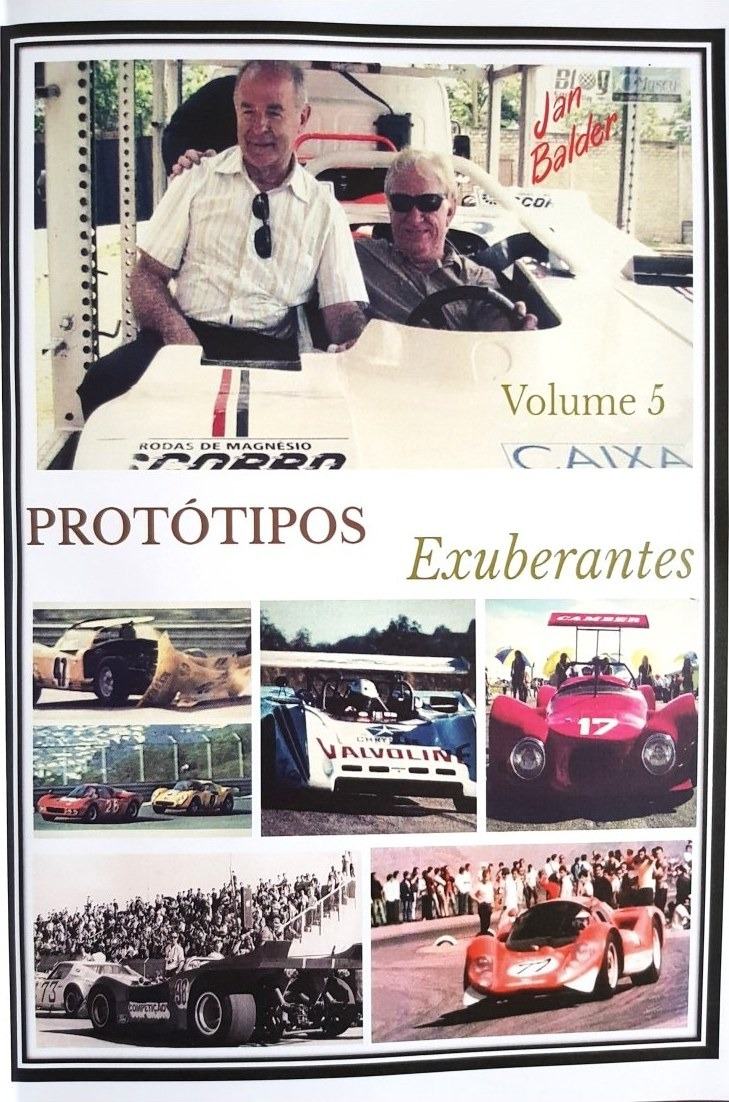
The Sabre appears in Protótipos Exuberantes, Volume 5, photographed at the Três Horas de Interlagos in 1972, and in the Racing Sports Cars archive, which lists the chassis as Sabre D4 #S-71 001, open bodywork, mid-engined, white with blue trim, entered by Jocar/Davox.
Two things in that record are worth separating before anyone cites it. The book credits the construction to Alexandre Guimarães with Anísio Campos, where this report credits Alexandre Freitas — a name discrepancy that has never been reconciled in print. And the Racing Sports Cars page files 1983–85 Can-Am entries for a Robert Goulet "Sabre" under the same marque name; those are a different car entirely.
Neither changes the chassis. It does mean the published history of this car is thinner and looser than the file in front of you.
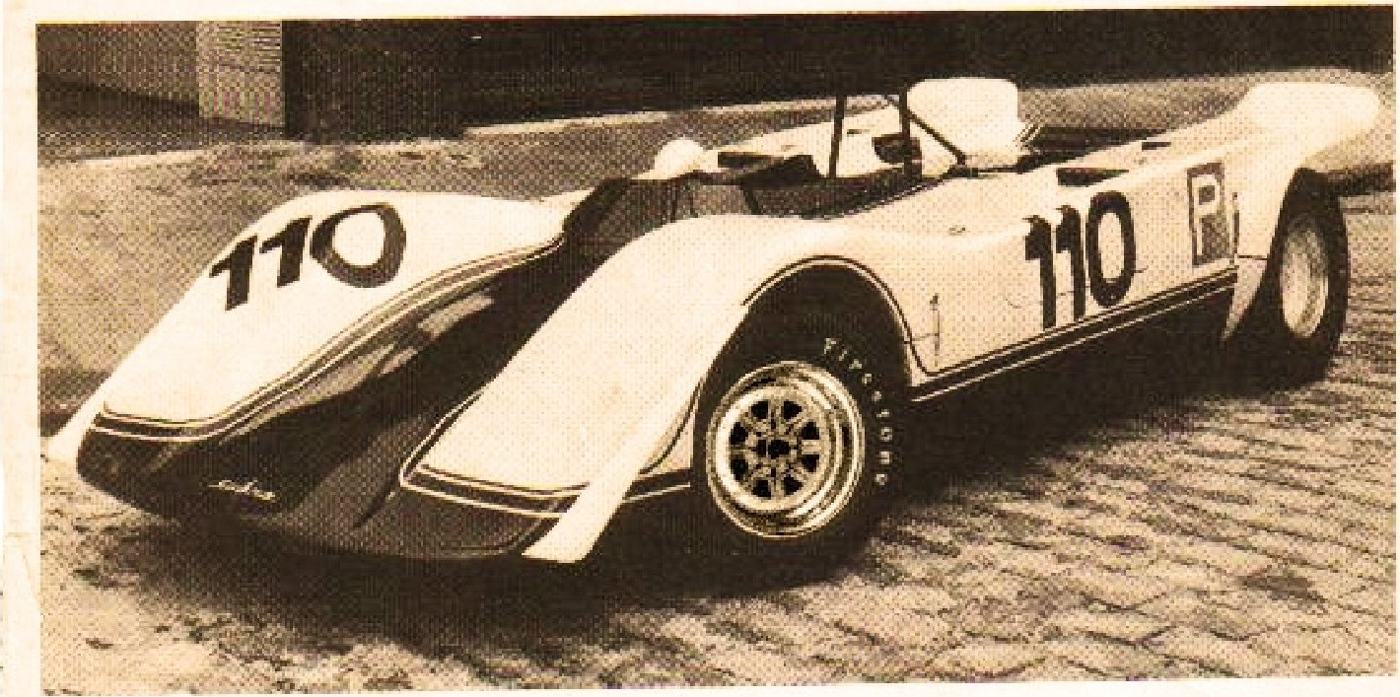
Last start, 16 November 1975, Cascavel de Ouro. Ninth. Then the record simply stops for forty-three years.
The car went to Chevron Heritage — the same lineage that drew the B16 the frame was copied from in the first place. The restoration ran five months.
New skins went onto the chassis frame, and new front and rear subframes were manufactured. The rear subframe is specific to this car: the Sabre was designed around a Porsche engine, and nothing off a Chevron fits it.
Newly fabricated wishbones and other suspension components were supplied wherever the original units showed unacceptable signs of age and wear.
The front and rear uprights are new Chevron B16/B19 magnesium alloy units, cast and machined in 2018 — the same part number Siffert's dealership supplied in 1970, made again.
Riveted to the aluminium: MAGNUM KAIMANN LTDA, Av. Leblon 653, Interlagos, São Paulo, Brasil. Modelo SABRE D4. Chassis S-71*001.
New skins, new subframes, new uprights — and the one piece that makes it this car rather than a replica of it, still in place.
The fibreglass came back first in bare white — nose, tail, the deep engine cover — then went under tape for the blue.
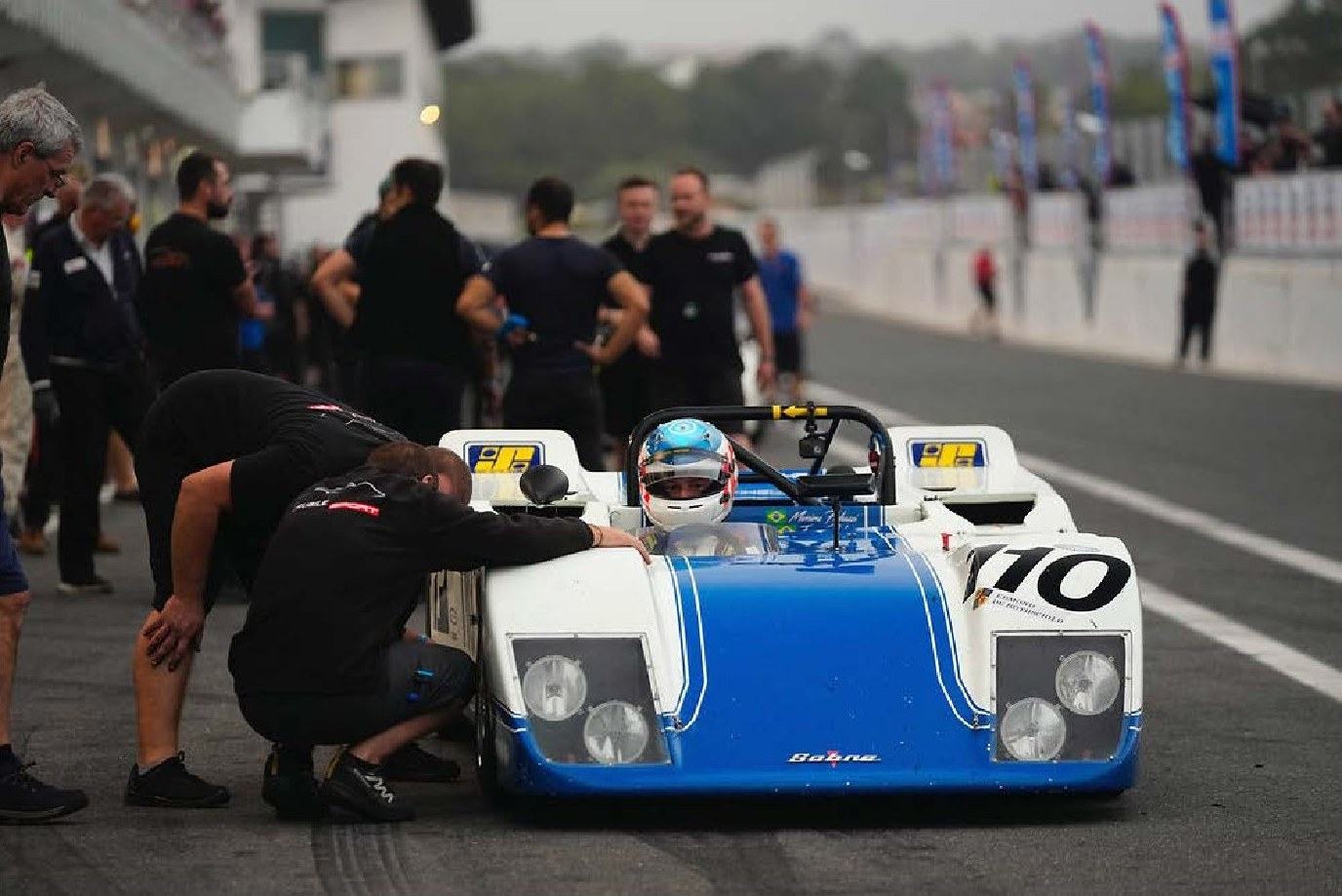
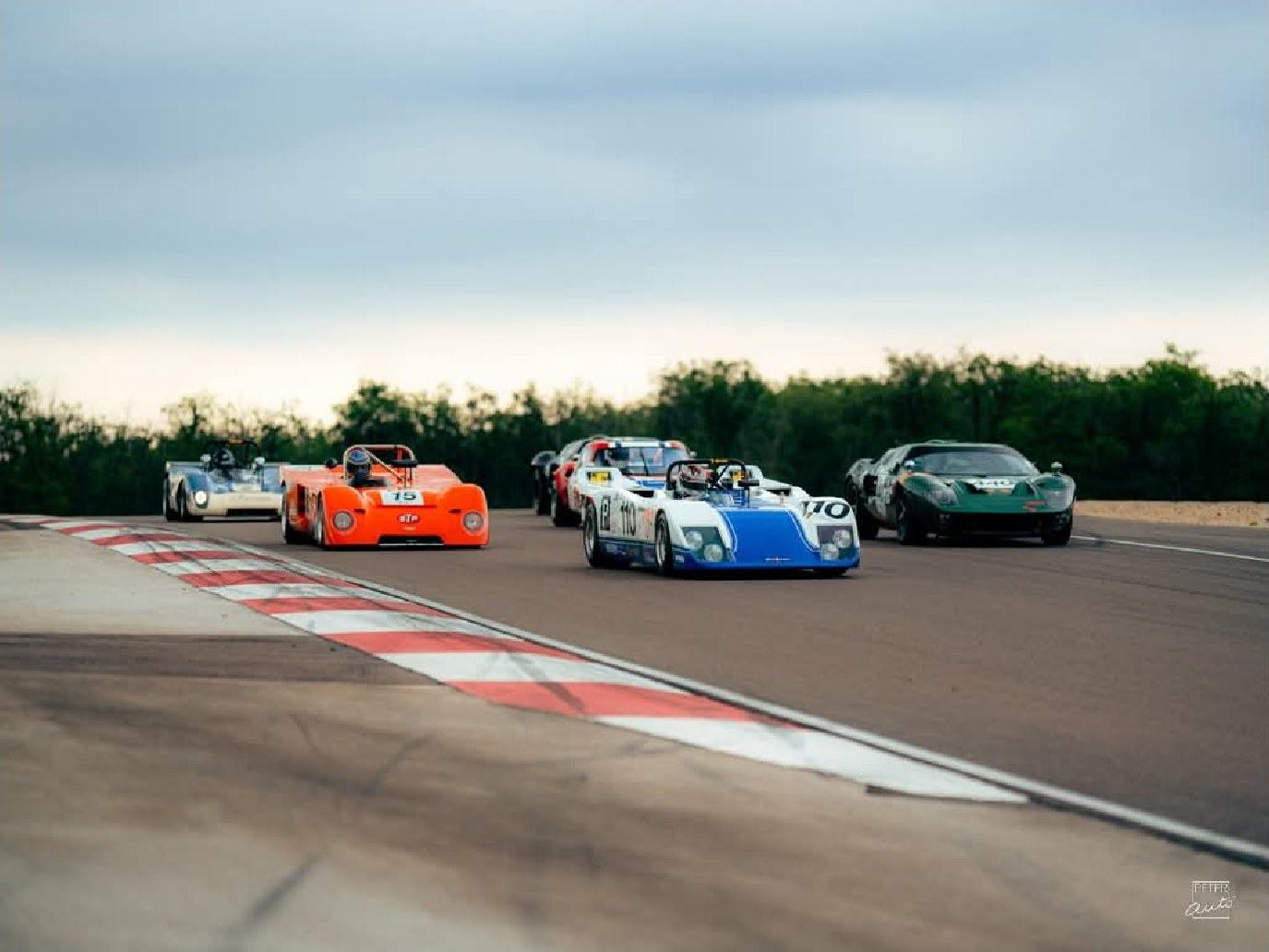
The livery it wears is the one it raced: white over blue, number 110, DIVISÃO 4 and the Brazilian flag on the flank.
Chevron Heritage signed the certificate of restoration for chassis S-71*001 on 19 April 2020 — Tim Colman, Managing Director.
What came out was not a museum exhibit. It was an eligible historic sports prototype with a Porsche engine behind the driver and a full set of period papers.
As built in São Paulo in 1971, and as restored between 2018 and 2019.
The rear subframe is the part of this car that cannot be sourced. Chevron parts fit the front of a Sabre because the front is a Chevron. The rear was drawn in São Paulo to hang a Porsche engine off a Chevron-derived frame, and it exists on exactly one chassis.
That is what makes S-71*001 a Sabre rather than a B16 with a Brazilian badge — and it is the reason any future work on this car starts with the same fabrication problem Freitas solved in 1970.
Fifty years after Tarumã, the same chassis is running the European historic calendar — Spa, Paul Ricard, Estoril, Dijon — in the same white and blue, wearing 110.
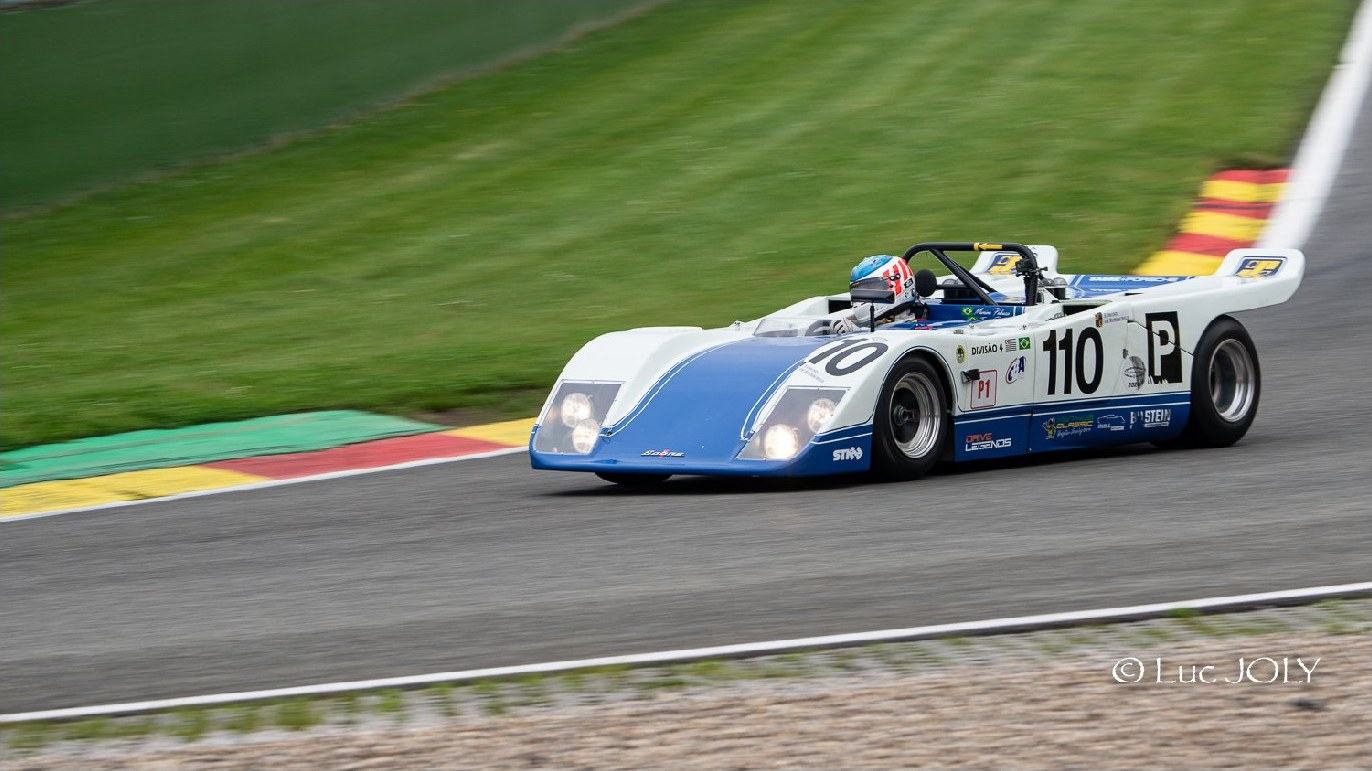
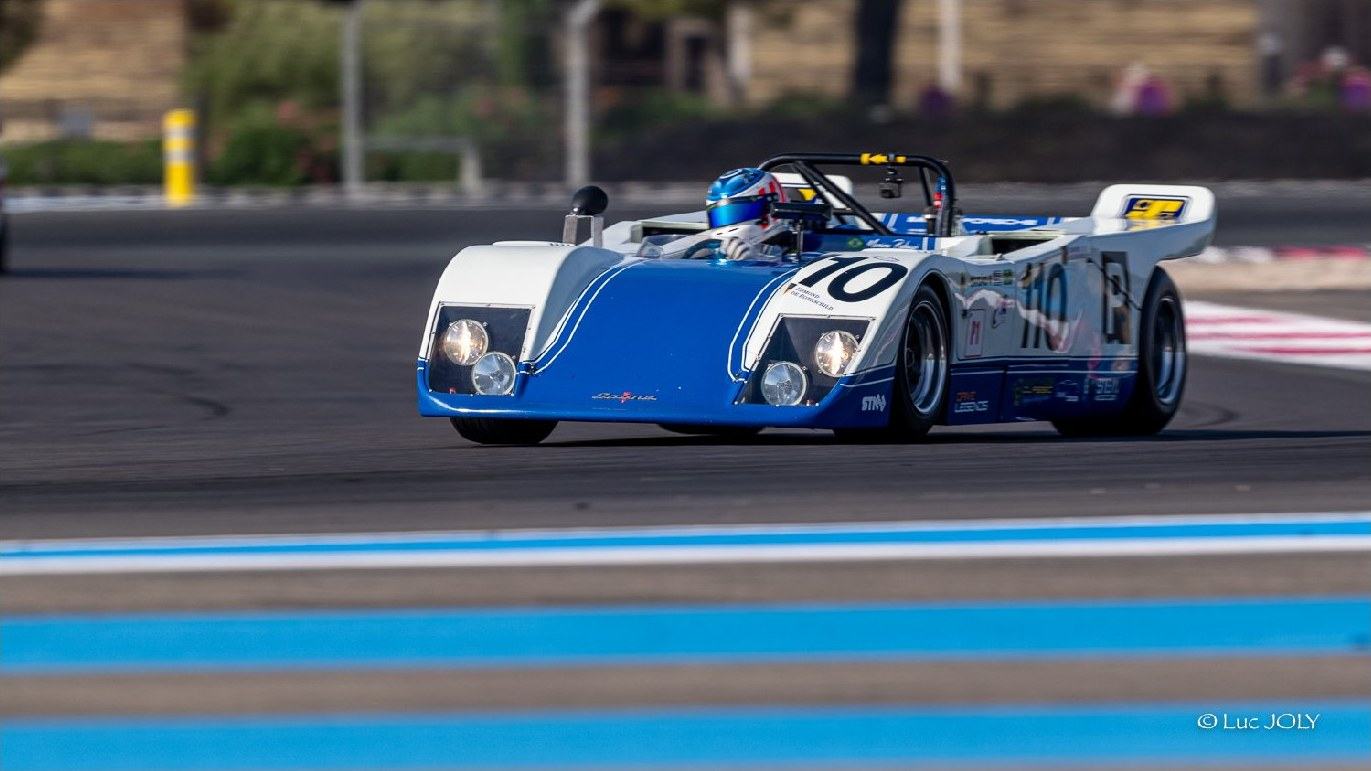
"It is just amazing to see this very rare Prototype Sabre — Porsche D4 in such a perfect and original condition. This car was one of the protagonists that made history on the Brazilian motorsport legacy.
I hope you keep racing this car for a long time, and show the Brazilian history worldwide."